Change Makers Stage
Building Bridges: A Multigenerational Dialogue on Integrating Sustainability in Corporates
Day 2 : 12:25 – 13:15
“Building Bridges: A Multigenerational Dialogue on Integrating Sustainability in Corporates” is a panel discussion consisting of different actors collaborating on corporate sustainability projects – employers and youth employees from the same company, and start-up representatives with their larger corporate clients. Speakers are invited to share their case-studies of success, challenges faced, and advice related to leveraging opinions from youth in corporate settings.
The key takeaways from this session are:
(1) To gain understanding surrounding employer-employee collaboration for implementing systemic sustainability changes through leveraging youth opinions and ideas.
(2) To visualise how green start-ups and their clients can work together to implement change towards sustainability in corporations.
(3) For youth to gain insight into how they can voice their opinions as employees to drive change towards sustainability in their corporate roles.
(4) Showcase how companies can accommodate and be open minded towards youth opinions and ideas in corporate settings.
Learnings
- Case-study overview by employer and client (higher corporate) representatives – Tell us about your experience related to initiating corporate sustainability, giving a specific example of multigenerational or interdepartmental collaboration.
- Ask employee and start-up representative about the initiation of their respective projects – How was the project initiated? What structures were in place to allow for sustainability related discussions?
- Identify pain-points, or past and present challenges, in executing sustainability initiatives – What challenges have you faced, or are you currently facing, in initiating and executing corporate sustainability initiatives
- Identify key factors for successful implementation of sustainability initiatives – What were the key factors, dynamics or structures that led towards successful implementation of sustainability projects at a corporate level?
- Future outlook and advice for both youth in corporate settings, and for corporates looking to implement sustainability, emphasising the importance of multigenerational dialogue on sustainability in corporate settings – What advice do you have for youth attempting to step up within their companies to initiate sustainability projects? What advice do you have for other corporations looking to implement sustainability? Why is it important to create spaces for youth to speak up in corporate settings?
Post-Event Actions
- Empower youth to speak up and share ideas regarding sustainability in corporate settings, and encourage youth to initiate cross-departmental collaboration for interdisciplinary action.
- Promote sustainability initiatives across corporations, inspiring additional sustainability-related corporate action
- For business representatives, we hope to inspire the creation of spaces for youth and mobilise resources to encourage integration of sustainability.
Speakers

Moderator
Iyla Davis
Event Team Officer
Iyla Davis
Event Team Officer
Iyla is a second-year student at the University of Hong Kong studying a Bachelor of Arts and Sciences, with a focus in Sustainability and Politics. Iyla previously studied at United World College Thailand, founding an environmental advocacy and beach cleaning organization and working on a provincial plastic-bag ban alongside the Phuket government. Through the youth-led organization, she managed and curated events to educate others about the importance of waste management to combat plastic pollution. Now, Iyla is a member of the NESS events team, collaborating on events such as the BEC x NESS Green Jobs Fair and Hong Kong Climate Emergency Summit, promoting climate literacy and career pathways in sustainability for Hong Kong youth.
My sustainability goals for 2024:
Overconsumption is a huge issue in Hong Kong, leading to excess waste and pollution. Recent trips to Sai Kung’s remote beaches have left me devastated, white sand barely visible underneath mounds of washed-up plastic waste. While ocean currents can transport others’ waste to our shores, it is a harsh reminder that disposal of waste does not equate to disappearance. While I am excited to see the potential impact of the new MSW charging scheme, I hope to see not only greater awareness about the volume of waste we produce individually, but for corporations to take responsibility for the waste they enable. I hope to see an accelerated transition towards low-impact, biodegradable packaging for businesses, and an increasing effort to prioritise environmentally conscious production to reduce stress on landfills.

Joanne Lai
Assistant Manager, Sustainable Development
Joanne Lai
Assistant Manager, Sustainable Development
Joanne Lai is the Assistant Sustainable Development Manager of Swire Properties. Her work involves supporting the Company’s Sustainable Development (SD) 2030 Strategy, and leading the planning and implementation of SD tenant engagement initiatives such as the Green Performance Pledge (GPP) programme with office tenants, and initiatives that focus on resource and circularity, such as HK’s first Smart Waste Reduction Challenge, and the pioneering Smart Reusable Cup and Food Box Programme.
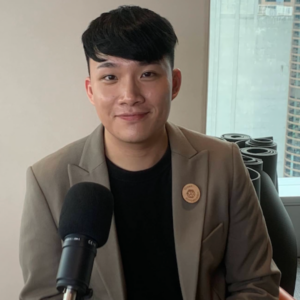
Clement Li
Business Development Manager
Clement Li
Business Development Manager
Clement started his career in the Marketing and Events Management field, leveraging his experience and bringing it into the Business Development and Client Relations sector.
Currently working at Spare-it, a waste data monitoring solution company that enables in-building waste data to empower change and unite organisation around their sustainability goals.
Understanding both the customer and the market’s needs to drive sustainability initiative and waste reduction efforts.
My Sustainability goals for 2024:
I hope to see both corporates and individuals can put more attention and effort in circularity, and the concept of “reduce from source”. Rethink our daily lives and how we see, treat valuable resources.
Technology is a tool that enables change, but ultimately it is up to us to take actions.
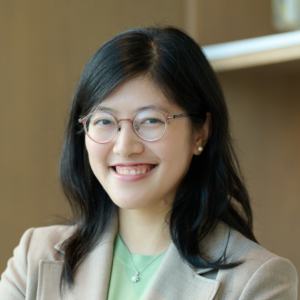
Priscilla Lin
Manager, Strategy & Sustainability
Schneider Electric (Hong Kong) Limited
Priscilla Lin
Schneider Electric (Hong Kong) Limited
Manager, Strategy & Sustainability
Priscilla Lin is Strategy and Sustainability Manager at Schneider Electric Hong Kong, where she works with businesses and institutions to accelerate climate action through technology, collaboration and innovation. She leads sustainability initiatives locally and supports organisations in advancing their climate commitments and resilience strategies.
Before joining Schneider Electric Hong Kong, Priscilla advised companies on sustainability strategy, reporting and stakeholder engagement. Drawing on experience from both the corporate and non-profit sectors, she is a strong advocate for collective action and believes meaningful climate progress requires collaboration among businesses, governments and communities.
Priscilla has participated in COP26, COP27 and COP29 and continues to champion climate education, youth empowerment and community engagement.
My sustainability goals for 2026:
To foster greater collaboration across business, government and civil society, accelerating climate action and integrating sustainable development more deeply into policy, business decision-making and public discourse.

Charlotte Wang
Strategic Marketing Specialist
Charlotte Wang
Strategic Marketing Specialist
Charlotte Wang joined Schneider Electric (Hong Kong) Ltd. as a Management Trainee and now works as a Strategic Marketing Specialist. Charlotte specializes in strategic research and market analysis, with passion and diverse experience in sustainability, green building and energy optimization. She has been involved in projects focused on developing sustainable and innovative solutions for buildings and infrastructure.
Charlotte holds a Master’s degree in Environmental Management from the University of Hong Kong, and is dedicated to driving positive change in the energy sector and utilizing technology to create a better future.
My sustainability goals for 2024:
Leverages technology to drive positive behavioural change, empowering individuals, organizations, and societies to embrace sustainable practices.
Supported by
Network of Environmental Student Societies
NESS is a youth-led organization that advances the local climate movement by raising awareness, building capacity, and connecting youth with stakeholders. Through intergenerational collaboration, NESS curates conferences and workshops to equip youth with climate action knowledge and skills. Besides climate education, NESS focuses on green jobs to bridge the gap between businesses and youth.
Our sustainability goals for 2024:
- To bridge the current gap between sustainability youth talents and businesses in the arising green job market
- To empower more youth to take climate actions from their respective backgrounds or professions
- To establish more intergenerational collaboration and partnership for meaningful youth participation in climate actions and initiatives
General Enquiry Email Address: info@nesshk.org